Most Bloomington drivers book an oil change thinking about one thing: the oil. You hand over the keys, sit in the waiting room, and get back an invoice with a few extra lines you did not ask about. Tread depths. A pad measurement. A note about a boot or a hose. It is easy to read that list as a shop looking for extra work.
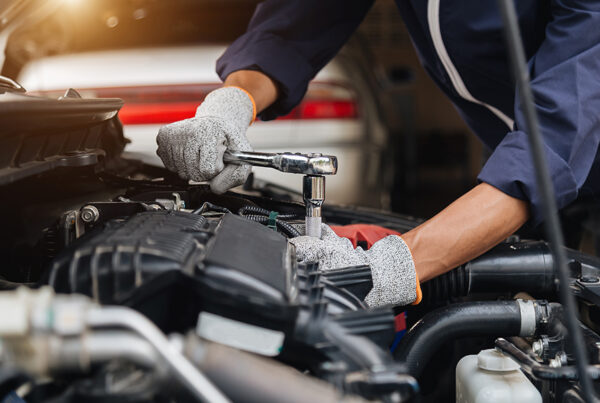
Look at it a different way. For most drivers in Bloomington-Normal, an oil change is the only appointment all year where the whole vehicle goes up in the air, wheels off the ground, under good light, with a trained person standing under it. Nothing else in your routine puts a technician’s eyes on your brake lines, your tie rod ends, or the inside shoulder of your front tires. Those extra lines are not a side hustle. They are the part of the visit you cannot get any other way.
So here is the honest answer to what is checked during an oil change, stop by stop, and what each note on the paperwork actually means. Call it the oil change inspection checklist your technician is already working through while the car is over your head. It comes with every oil change we do.
Why the Lift Is the Point of an Oil Change in Bloomington IL
An oil change requires access to the underside of the vehicle. Once the car is up there, the tech is standing in front of the exact parts nobody can see in a parking lot: the exhaust, the fuel and brake lines, the suspension, the boots and bushings, the underside of the engine.
That is the whole logic of the inspection. It is not bolted on to pad the ticket. Every item below takes seconds while the car is already in the air, and would need its own appointment otherwise.
One thing worth saying up front: a note is a measurement, not an order. When a tech writes down a number, they are recording where a wearing part sits on its journey from new to worn out. Most notes are watch items. A few are safety items. Any shop worth using will tell you which is which without being asked.
The Oil Change Inspection Checklist Starts With Tires
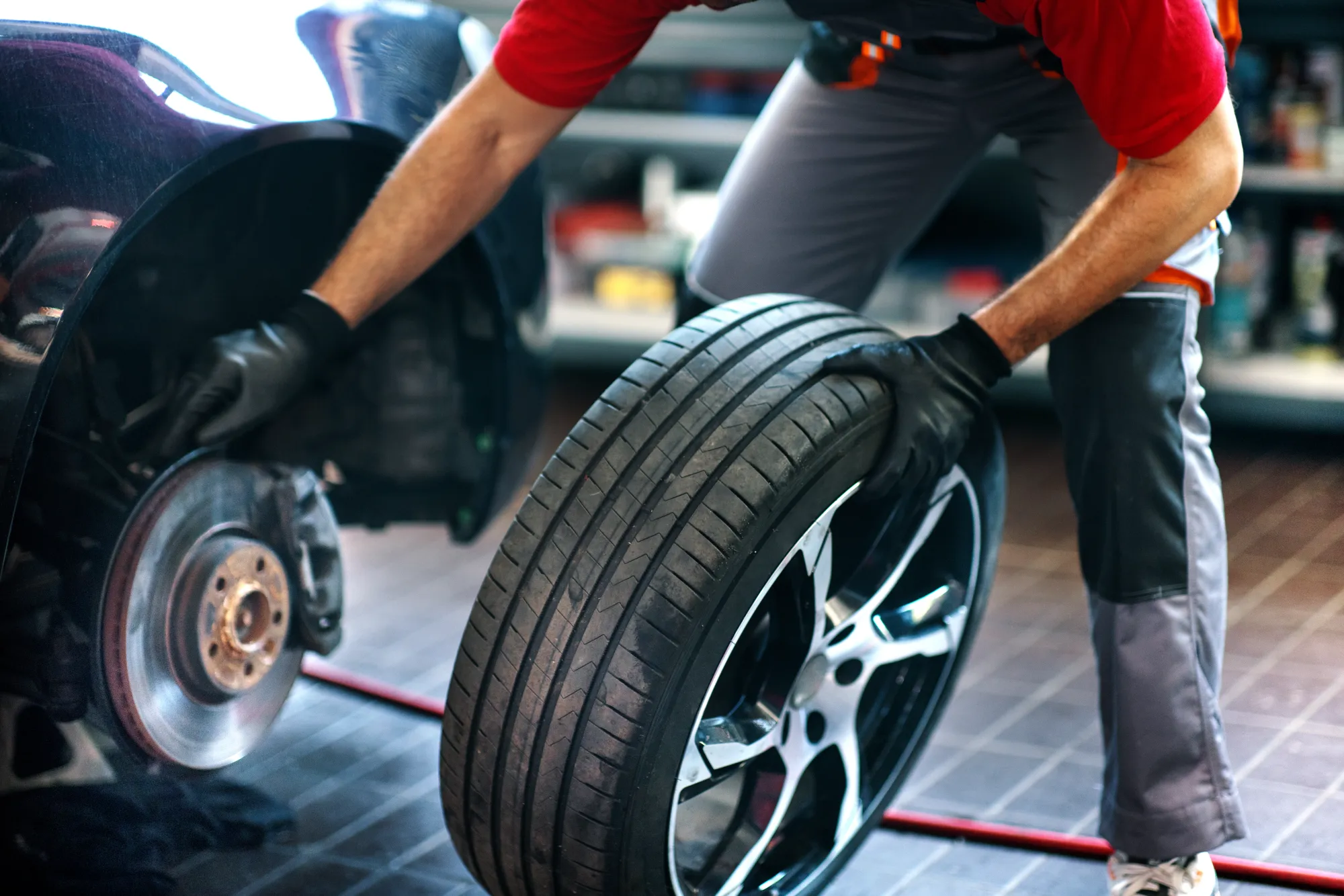
Tires are the first stop, and at a Bloomington tire shop they get the most attention.
Tread depth gets measured, not eyeballed. It is recorded in 32nds of an inch, so a note reading “4/32 all around” is telling you there is 4/32 of an inch of usable tread left. Illinois sets the legal line here. Under the Illinois Vehicle Code, section 12-405 on the operating condition of pneumatic tires, a tire is considered unsafe when the depth of the tread groove falls below 2/32 of an inch. The same section bars selling a tire for highway use with less than 3/32 of an inch of tread.
That is why 4/32 gets written down instead of waved off. It is legal, but the data says the range matters. In its 2012 report on tire-related factors in the pre-crash phase, the National Highway Traffic Safety Administration found that about 26 percent of tires measuring 0 to 2/32 of an inch were on vehicles that had experienced tire problems in the moments before a crash, compared with only about 8 percent of tires in the 3/32 to 4/32 range. Writing the number down lets you and the shop watch a trend instead of arguing about the word “fine.”
Wear pattern is a symptom, not a tire problem. This is the part drivers most often misread. If the inside shoulder of both front tires is worn and the rest of the tread is healthy, the tire did not fail. Something is holding the wheel at an angle. Feathered edges, a single worn shoulder, or cupping across the tread all point back to alignment, worn suspension parts, or inflation history, all covered in our guide to making your tires last longer. A note about wear pattern is pointing at a cause, not selling you a tire.
Sidewalls get a look too. Bulges, cuts, curb damage, and cracking in the rubber are visible from underneath in a way they are not when the tire is loaded on pavement. If something turns up there, the next question is whether the tire can be repaired or needs replacing.
Pressure gets set with a gauge, and this matters more than most drivers think. The tire pressure monitoring system in your dashboard is required to warn you only when a tire is 25 percent or more below the pressure listed on your door placard. That is an alarm, not a gauge. Your tires can be meaningfully low, especially after a cold snap in Bloomington, Normal, or anywhere else in McLean County, with the light never once coming on. The NHTSA report found that tires underinflated by 25 percent or more were three times as likely to be cited as critical events in tire-related crashes. Setting pressure by gauge while the car is in the bay closes that gap, and correctly inflated tires are one of the simplest ways to protect your fuel economy too.
If a tire measurement means you are shopping for replacements sooner than you expected, ask us for a current quote on your size rather than guessing from a number you read online.
Brakes: What a Bloomington Tech Can See Through the Wheel
Brakes are the clearest case for a wheels-off visit. Once a wheel is off, pad thickness can usually be read straight through the edge of the caliper. For context, a new brake pad is roughly 12 millimeters of friction material, about half an inch. Most manufacturers and mechanics call for replacement once the pad is about 75 percent worn, or down to around 3 millimeters. Wear sensors in many pads squeal or trip a warning light at roughly that same 3 millimeter point.
So when your invoice says “LF pads 4mm, RF 4mm, monitor,” here is the translation: your front pads are past three quarters worn and are approaching the usual replacement point, but they are not there yet. Nothing about that note says the car is unsafe to drive home. It says you will probably be talking about brakes at your next visit, and you know it in advance rather than on the day the sensor starts squealing on Veterans Parkway.
While the wheel is off, the technician is also looking at:
- Rotor surface and edge lip. A ridge around the outer edge of the rotor shows how much material has worn away. Deep scoring or heat discoloration gets noted.
- Uneven pad wear side to side. An inner pad much thinner than the outer one usually points to a sticking caliper slide rather than to the pads themselves.
- Flex hoses and hardware. Cracked rubber, weeping fittings, missing clips, and rusted hardware all show up here.
Suspension, Steering, Belts, Hoses, and Fluids: The Auto Repair Side of the Visit
With the wheels hanging free, the tech can load parts by hand, which is impossible with the car on the ground.
The wheel-rocking test tells two different stories depending on where the hands go. Gripping a front tire at 3 and 9 o’clock and pushing back and forth checks the steering linkage, including tie rod ends. Gripping at 6 and 12 o’clock and rocking checks wheel bearings and ball joints. Play felt this way is invisible from the driver’s seat until it turns into a clunk, a wandering steering feel, or a chewed-up tire. That is why “slight play in outer tie rod” shows up as a note long before you notice anything.
The rest of the underside check goes quickly:
- Shocks and struts get looked at for oil streaking down the body, which means the seal has let go.
- Boots and bushings get checked for splits. A torn CV boot slings its grease out and lets grit in, and catching it early is the difference between a boot and an axle.
- Belts get inspected for cracking, glazing, and missing chunks of rib.
- Hoses get squeezed. A hose that feels spongy, rock hard, or swollen near a clamp is aging out even if it is not leaking.
- Fluid levels and condition get read, not just topped off. Level tells you whether something is escaping. Color and smell tell you about the fluid’s condition.
Two words on the invoice are worth knowing here. “Seepage” means a gasket or seal is damp but not dripping, and it gets watched. “Leak” means fluid is actively leaving the vehicle, and that gets scheduled. If a note uses the second word and you are weighing what it will take to fix, contact us for a current quote before you make a decision.
The Illinois Undercarriage: Salt, Exhaust, and Lines
This section would read differently if we were in Arizona instead of central Illinois.
Central Illinois roads get treated hard. The Illinois Department of Transportation spread more than 312,000 tons of salt statewide during the 2024/25 winter, running more than 1,900 trucks across nearly 45,000 lane miles of road. That salt does its job on the pavement and then spends the rest of the season on the underside of your vehicle.
AAA research found that 22 million U.S. drivers experienced rust damage to their vehicles from salt and liquid de-icers over a five-year period, and identified brake lines, fuel tanks, exposed electrical components, and floorboards as the parts most vulnerable to serious corrosion. Those are not cosmetic parts. A brake line is a pressurized steel tube, and a rusted one is a safety item, not a watch item.
So when your car is on the lift, the technician is reading corrosion for severity, not just presence:
- Surface rust on exhaust pipes and heat shields is normal here and expected after any Illinois winter.
- Flaking, layered scale on a brake line or fuel line is the one that earns a photo and a conversation.
- Wet or stained seams along a line or a fuel tank suggest something is getting past.
- Rattling or hanging heat shields and loose exhaust hangers get caught here, usually before they start making noise.
The best defense is refreshingly boring. AAA recommends washing your vehicle often through the winter, paying particular attention to the undercarriage, and picking a wash that offers an undercarriage rinse to flush salt out of the places it collects. A few of those between December and March visibly change what we see at your next visit.
How to Read the Notes on Your Invoice After an Oil Change
Put it together and the paperwork stops looking like a sales pitch.
- Look for numbers, not adjectives. “Tires 5/32” and “pads 4mm” are measurements you can compare at your next visit. “Tires worn” is not. A shop that writes numbers is giving you something you can hold it to.
- Sort the list into safety and watch. Corroded brake lines, tread at or near 2/32, a fluid leak, and real steering play belong in the first group. Seepage, a slightly cracked belt, and pads with life left belong in the second.
- Ask what happens if you wait. The answer should be specific. “The boot is split, so the joint will start taking in grit and will eventually need replacing” is a real answer. “It could go anytime” is not.
- Ask for the order. If four things are noted, ask which one to do first and why. Any honest shop will happily rank them.
- Ask for a current quote when cost matters. Pricing moves too quickly for any article to name a number that stays true, which is why you will not find one here. Ask us for a current quote on the specific work your vehicle needs.
This article describes what a technician generally looks for during an inspection. It is not a substitute for a hands-on inspection of your specific vehicle, and any measurement or recommendation should come from the shop that actually has your car in the air.
Bring It to Don Owen Tire in Bloomington
Don Owen Tire has served Bloomington-Normal and McLean County since 1986, from our Empire Street and Olive Street locations, and our on-the-road service reaches area farms. When your vehicle comes in for an oil change, it goes up on the lift and gets looked at properly, and you get told what we found in plain language, with numbers, and an honest read on what is urgent and what can wait.
That is what an oil change in Bloomington IL should include. If you have been searching for a tire shop or auto repair in Bloomington Normal IL that will actually show you what it found, both stores are a short drive away, and it is the same approach we bring to tires, brakes, and general auto repair across McLean County.